
Over 500 stalking victims supported in Hampshire and Isle of Wight
20 April 2026
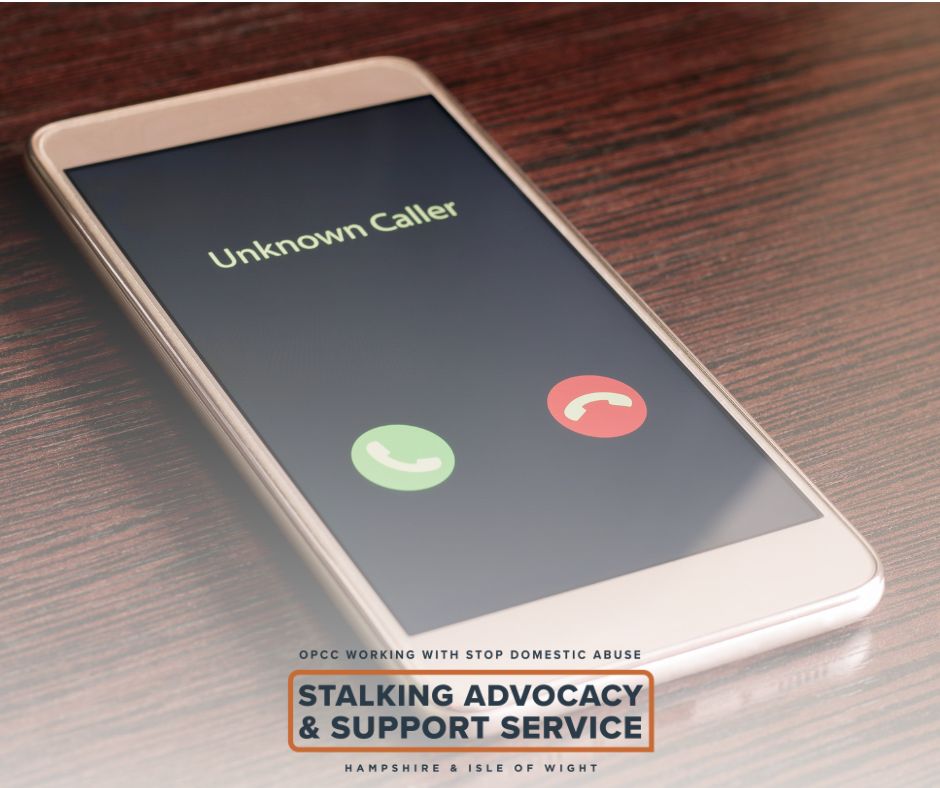
Police and Crime Commissioner Donna Jones has marked Stalking Awareness Week (20–26 April) by urging victims to seek help through her Stalking Advocacy and Support Service (SASS).
The service, delivered by the charity Stop Domestic Abuse, provides confidential support and safety planning. Since its inception in 2023, it has supported over 500 victims of stalking.
The SASS is part of the region’s Multi-Agency Stalking Partnership. A pioneering project which has been recognised as leading the way in response to stalking in a national super-complaint report published by the Suzy Lamplugh Trust.
The region’s approach was singled out for its innovative leadership, multi-agency coordination and the Commissioner’s strategic investment in both victim support and perpetrator-focused services.
The unique approach brings together police, probation, the NHS, the CPS, Youth Justice and specialist support for victims.
A key part of the project is ensuring all professionals understand how to spot the signs of stalking. Between April 2023 to March 2026, over 180 specialist consultations were delivered to police officers and probation staff to strengthen understanding of stalking behaviours and improve decision‑making.
Throughout Stalking Awareness Week, the Constabulary will deliver additional training for officers and staff, with a focus on recognising stalking early and responding in a way that supports victims, particularly where reporting feels overwhelming.
PCC Donna Jones said: “Stalking can slowly strip away someone’s sense of safety and control.
“Many victims question themselves, worry they won’t be believed and think they are overreacting. Stalking hides in plain sight. Victims rarely label it as stalking at first, and it can happen online as well as in person.
“I want people to know that if this is happening to you, help and support is available. You can reach out to the police or in confidence, at your own pace, and there are specialist services in place to listen, protect you and help you feel safe again.”
Anyone affected by stalking, or concerned about someone else, is encouraged to seek advice and support.
What does stalking look like?
Stalking always follows the same pattern – the FOUR:
- Fixated
- Obsessed
- Unwanted
- Repeated
It may not begin with threats. It might be constant messages. ‘Coincidental’ appearances. Gifts. Emails. Monitoring your movements.
Where to get help
👉 https://stopdomesticabuse.uk/stalking
📞 0330 0533 630
📧 info@stopdomesticabuse.uk
📮 Stop Domestic Abuse, PO Box 53, Havant, PO9 1UA
You can report this in different ways.
Is it an emergency? Is someone in immediate danger? Is a crime taking place or has one just happened? If so, call 999 now and ask for the police.
Working with perpetrators
The Multi-Agency Stalking Partnership works with perpetrators to change stalking behaviours. Over the last three years over 1,600 stalking cases have been reviewed by MASP professionals to protect victims. Hampshire & Isle of Wight Healthcare NHS Foundation Trust has provided psychiatric input to over 50 complex cases and 106 individuals were referred to a psychologist led intervention programme with 65% completing it in full. The Trust has also trained 1915 people within the partnership.
What can the police do?
Police have a range of powers that can be used to restrain perpetrators and protect victims, which includes Stalking Protection Orders (SPO). This type of order is applied for in the Court. Conditions which can be granted include restrictions on the perpetrator, such as preventing them going to specific locations, making contact, recording images, or referencing their victim on social media. They can also require the perpetrator to do certain actions, such as attend a stalking, drug or alcohol intervention programme, sign on at a police station, or provide police with access to their phones and social media accounts.
SPOs last for a minimum of two years. Breaching the protection order is a criminal offence.